A project by Mayank Kasana
Rudraksh,
the smart tree
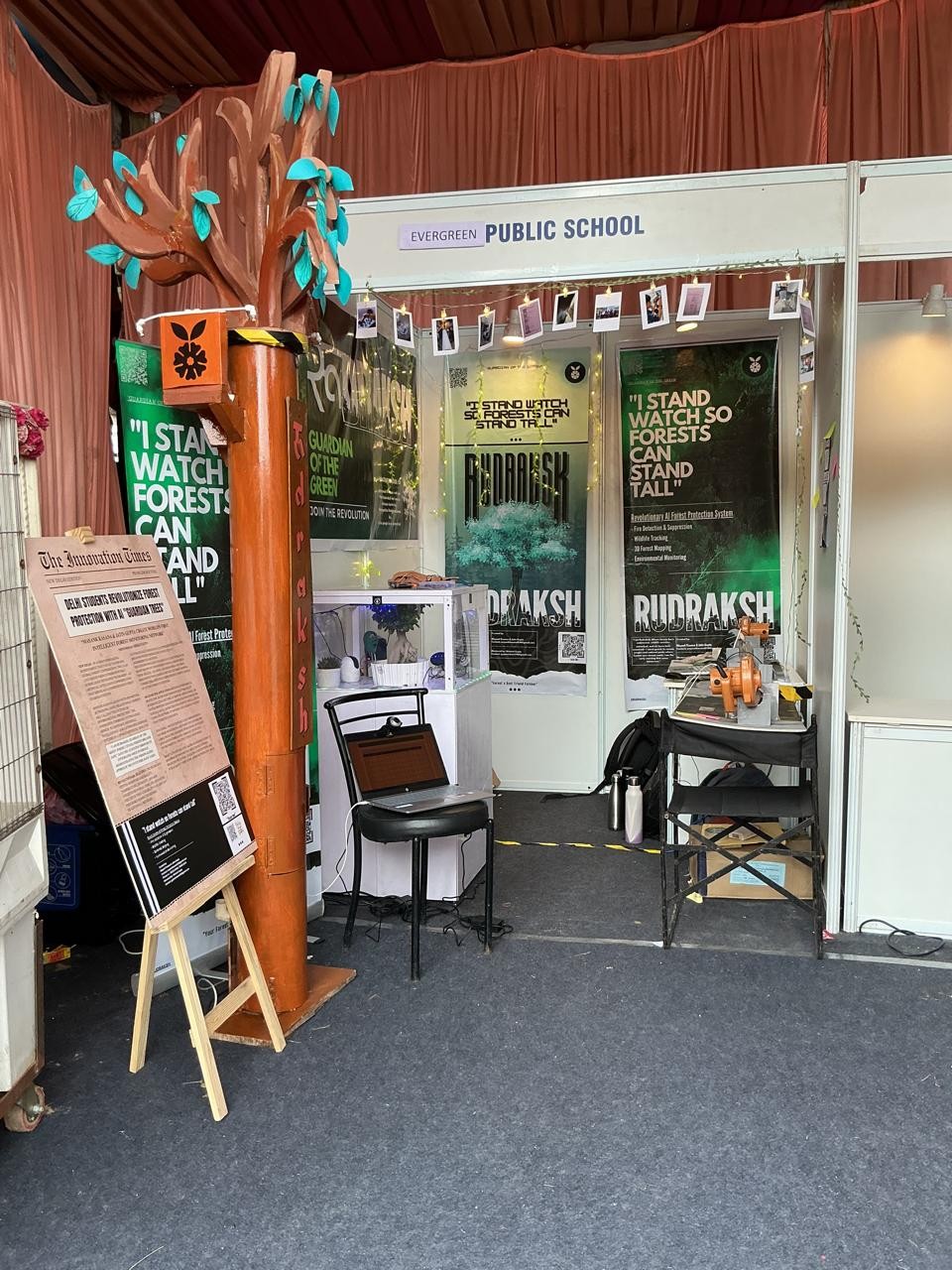
An artificial tree designed to watch for forest fires and spray them out with groundwater. I built the first full size tree and took it to the CBSE science exhibition.
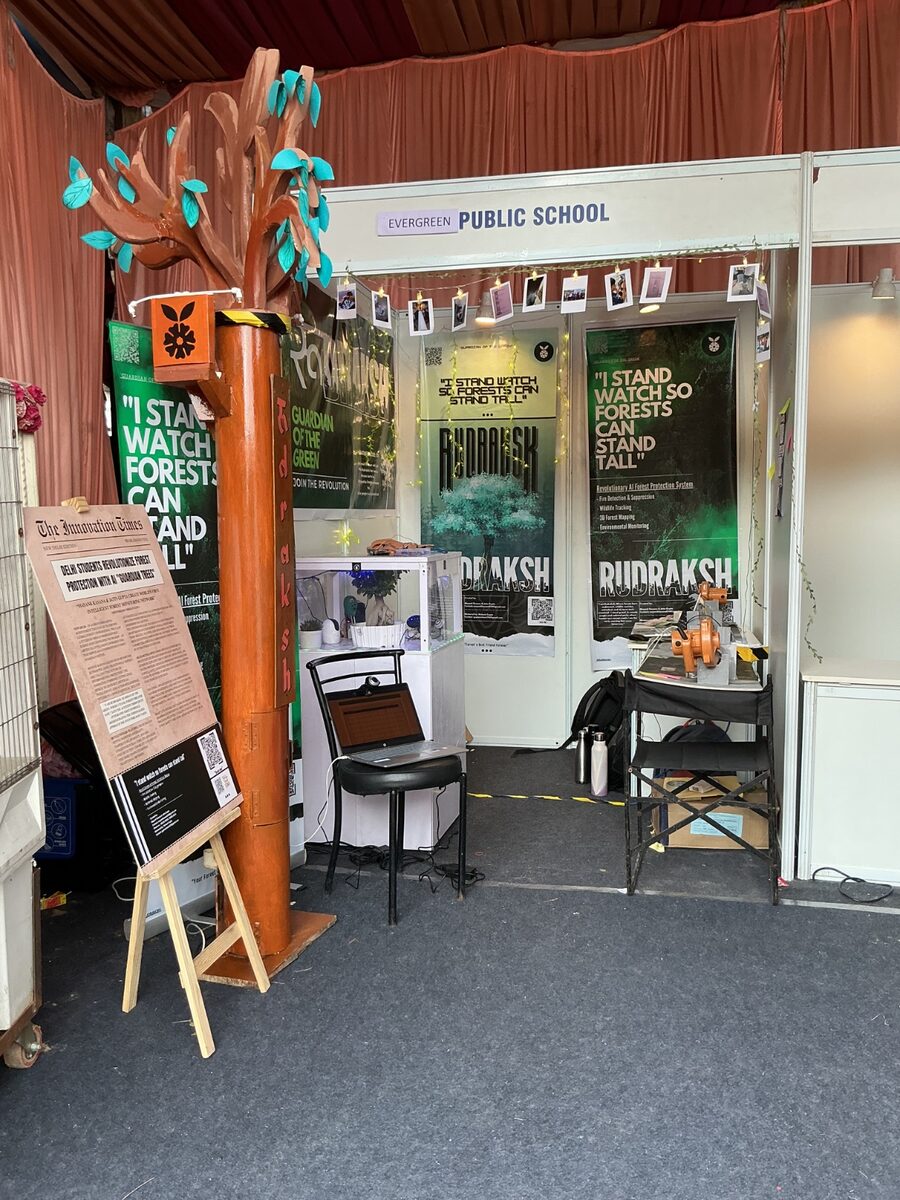
An artificial tree designed to watch for forest fires and spray them out with groundwater. I built the first full size tree and took it to the CBSE science exhibition.
A forest fire can start in dry grass and undergrowth and spread before anyone reaches the spot.
Some fire-watching satellites pass over a forest only at discrete overpasses, a few times a day, and the alert delay after a pass varies. Geostationary satellites make the opposite trade: they watch the same region around the clock, but their thermal imagery gives up fine detail, so a small fire can be difficult to detect depending on the sensor and the conditions. A fast moving fire front can still grow before anyone knows.
That gap is what Rudraksh is built around: better ground sensing, camera detection, and a tree that is already standing in the forest when a fire starts.
In my 12th grade summer break I went to ISRO's IIRS campus in Dehradun for a summer geo-sensing programme. There I learned geosensing: how satellites read the earth, what they can see, and what they miss. That is where the question started. If a satellite can miss a fire between passes, what could watch from the ground instead?
My first answer was not a tree. It was Honeycomb, an artificial beehive fitted with thermal and 360 cameras and vital sensors, meant to hang high on living trees. Honeycomb stayed on paper and I never prototyped it, but the question stayed with me: what if the forest had its own guardians?
That question became Rudraksh: a grid of artificial smart trees planted through plains forests. Each tree is designed to watch for fire, spray it out with groundwater, and double as a ground sensor. The same sensing can help track animal movement for their welfare and record ground conditions that matter when planning infrastructure like highway routes.
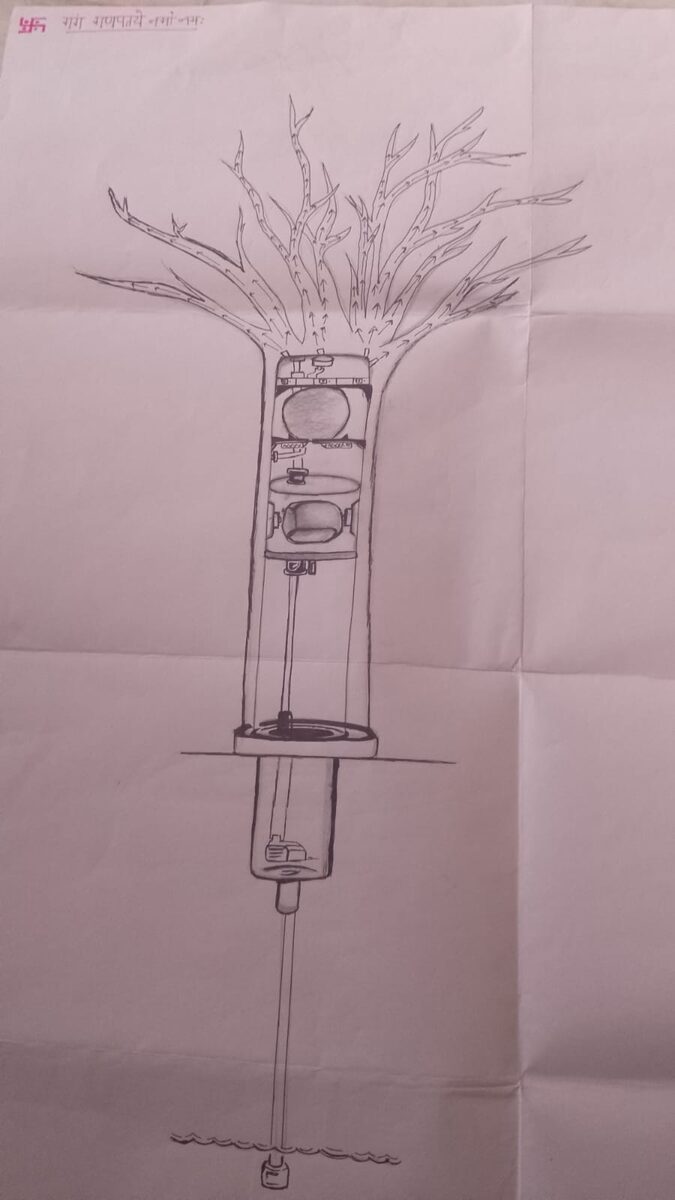
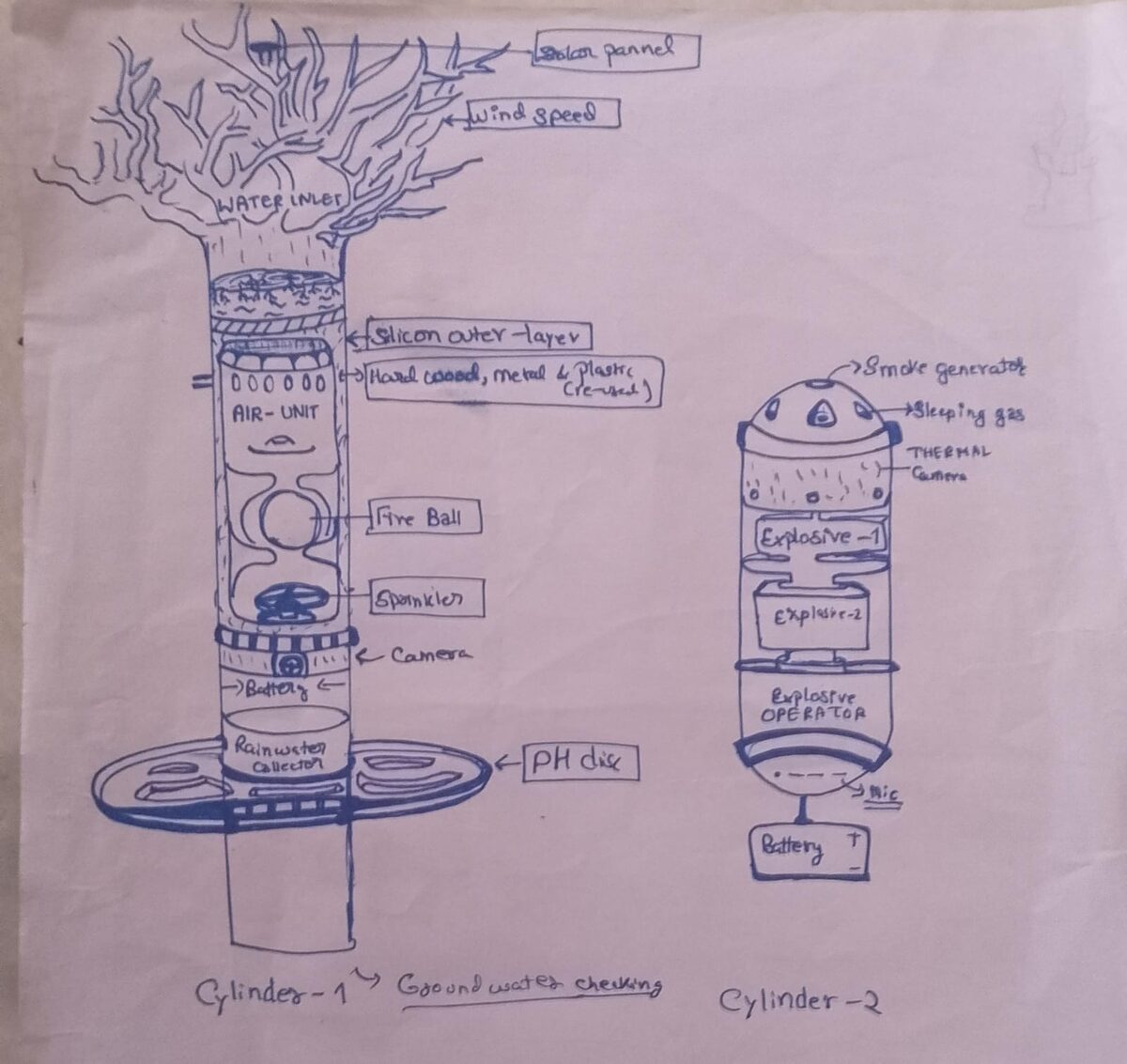
I sketched the tree as a vertical system, and every part has one job:
This interior layout comes from my sketches; it shows the job each part was designed to do.
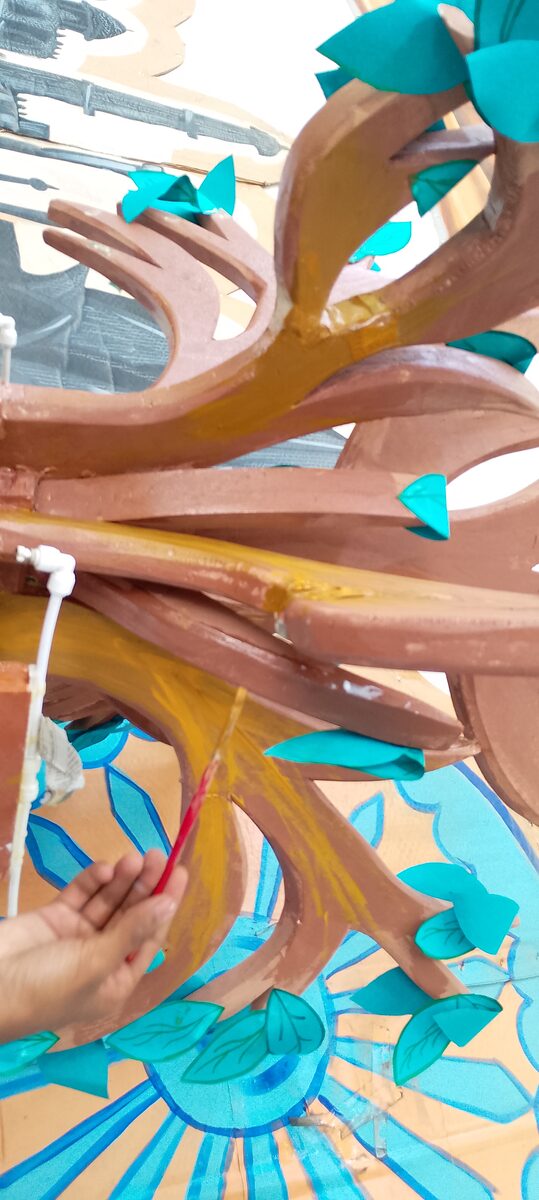
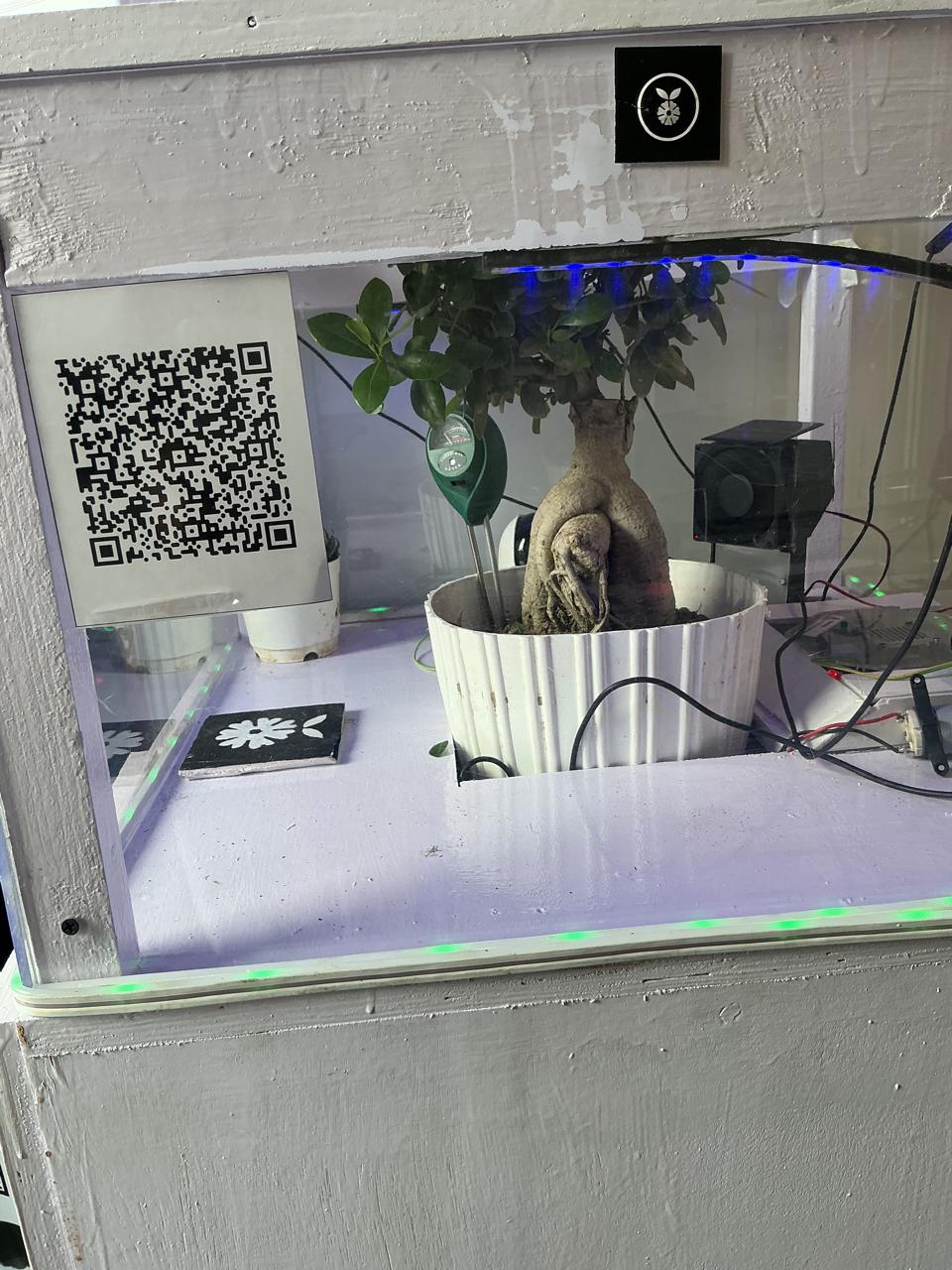
The build moved from testing components in a bucket, to forming the tube body, to running the wiring through the inside, fitting the pipes and hoses, painting, and finally fitting the branch crown.
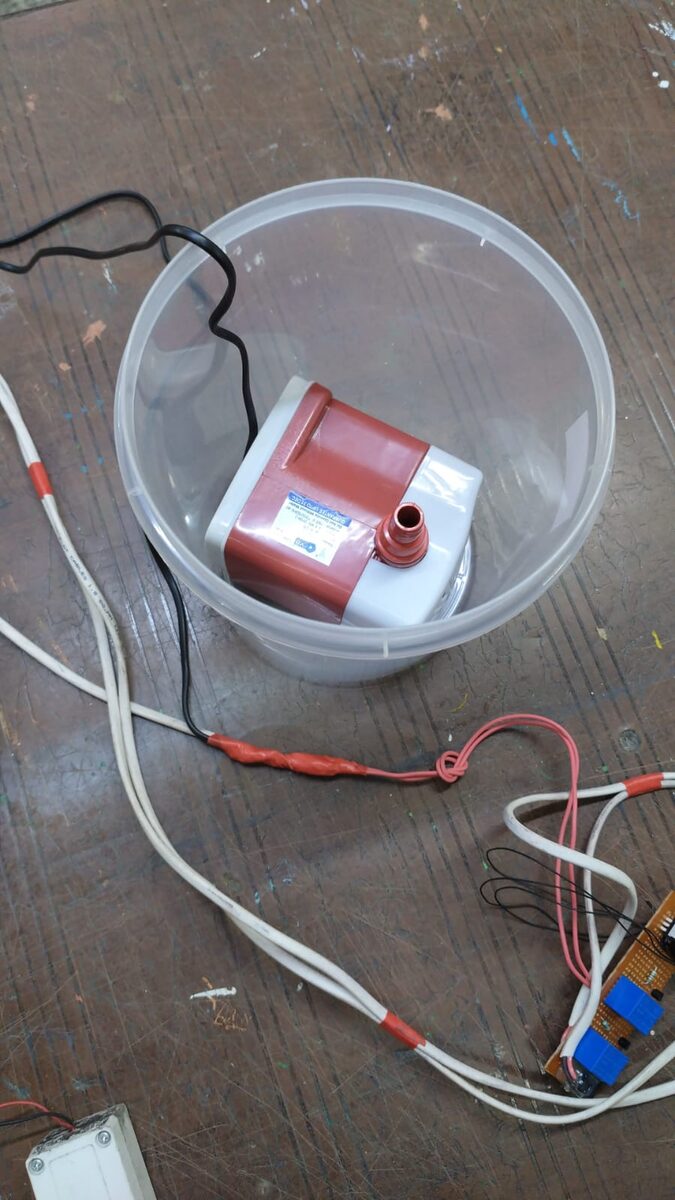
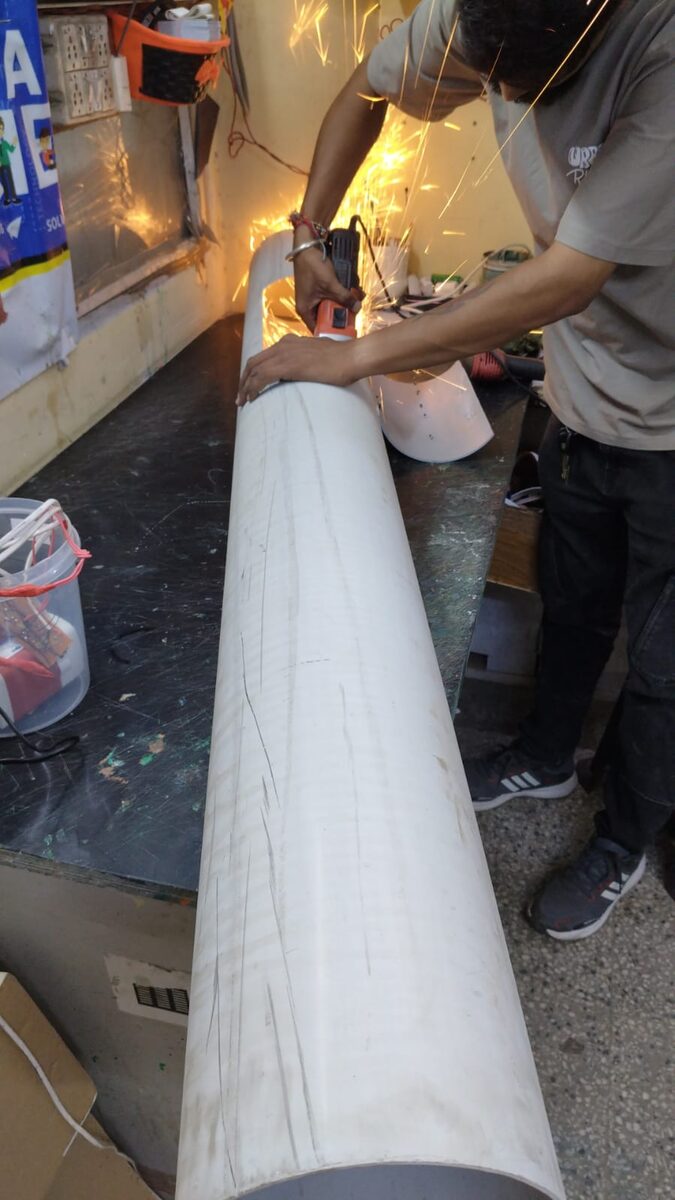
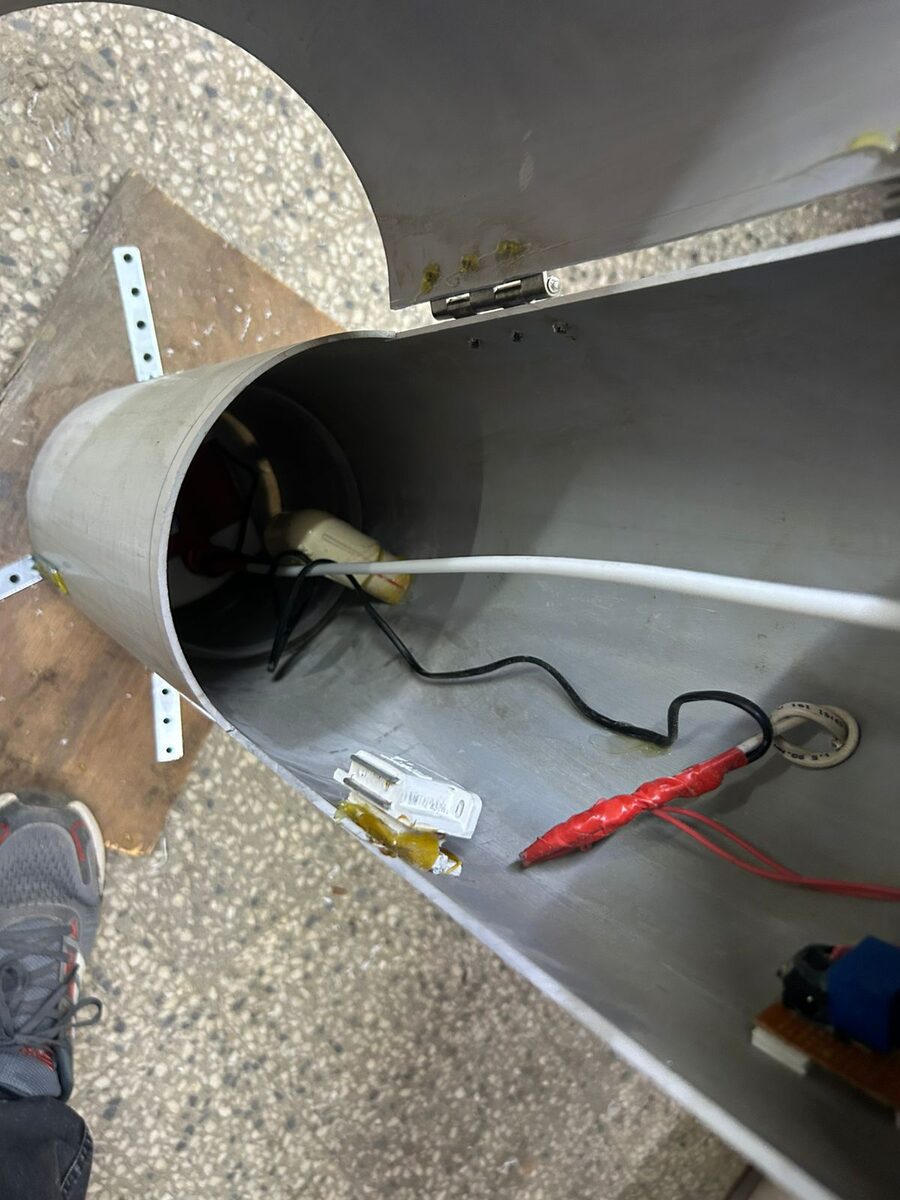
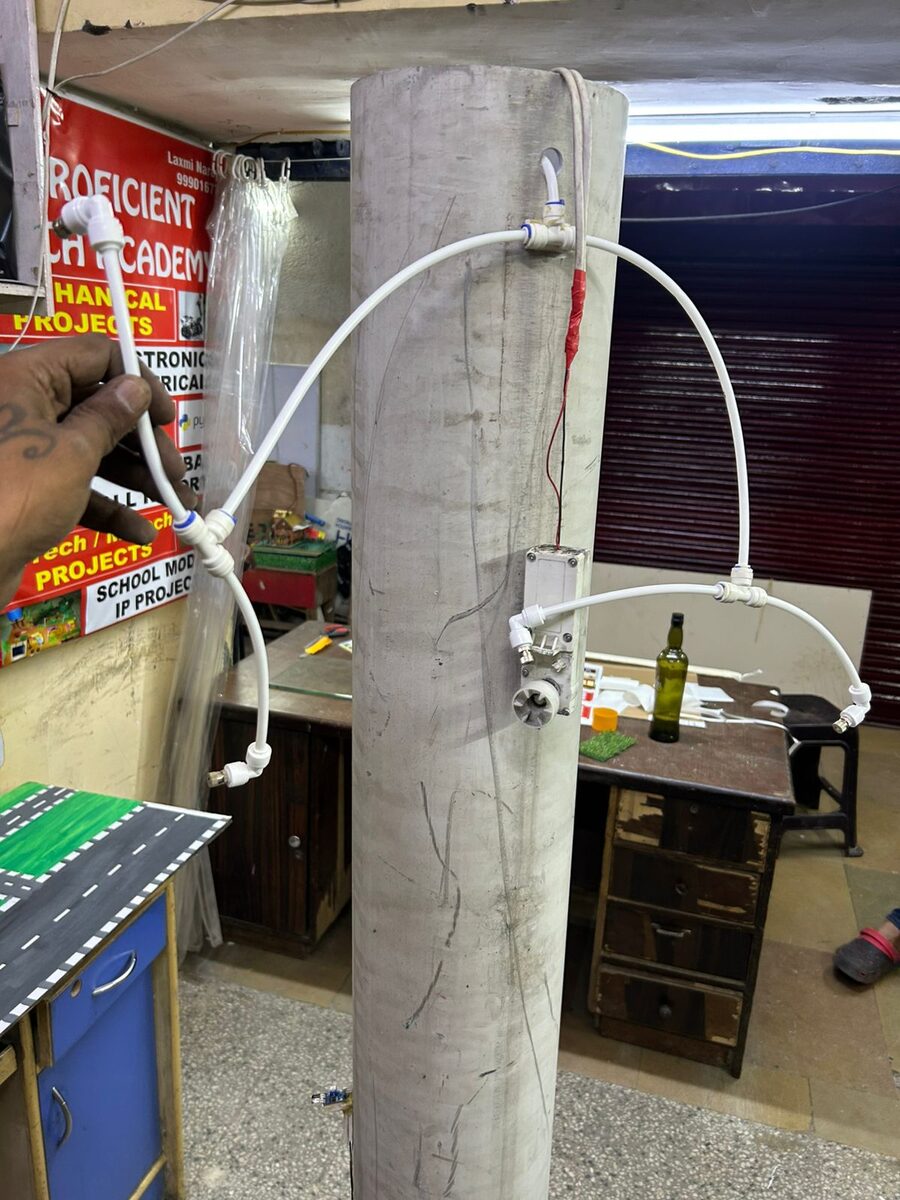
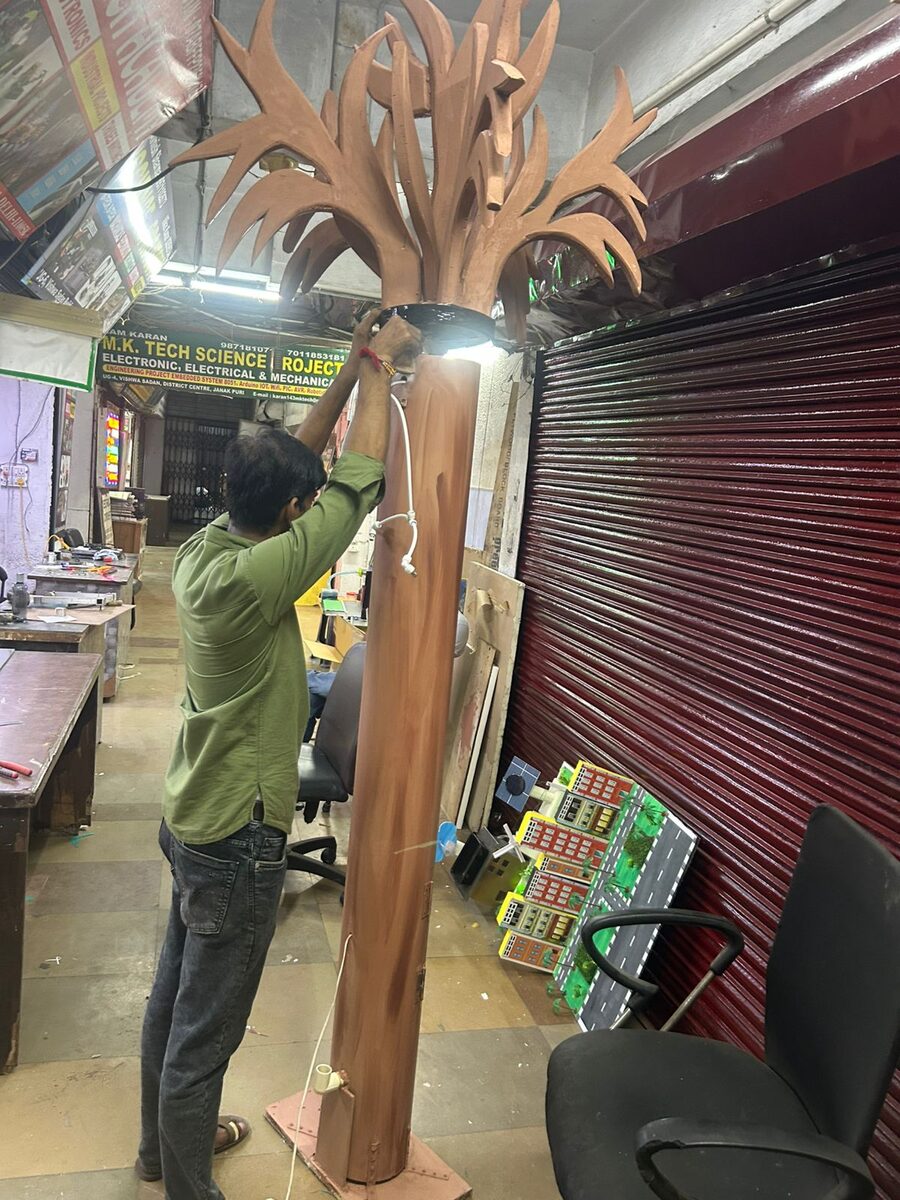
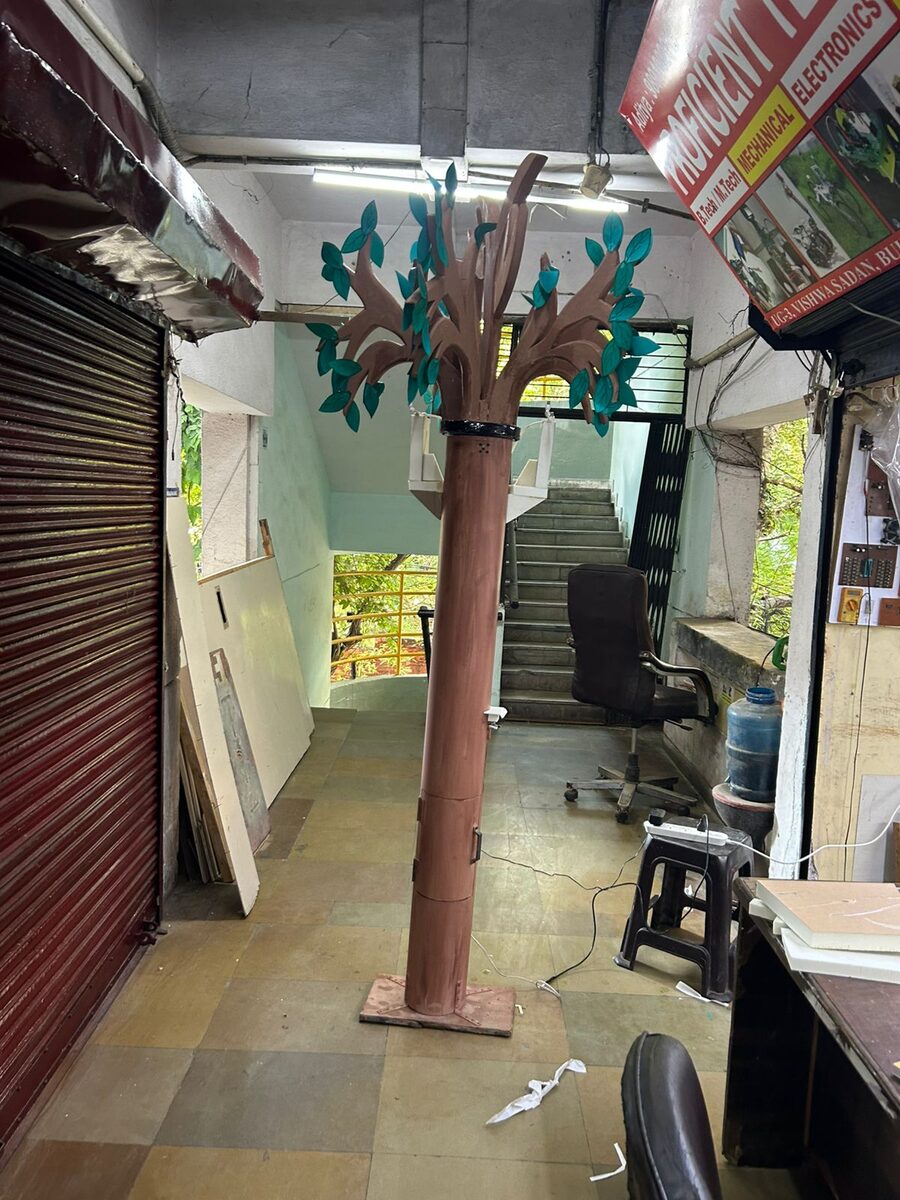
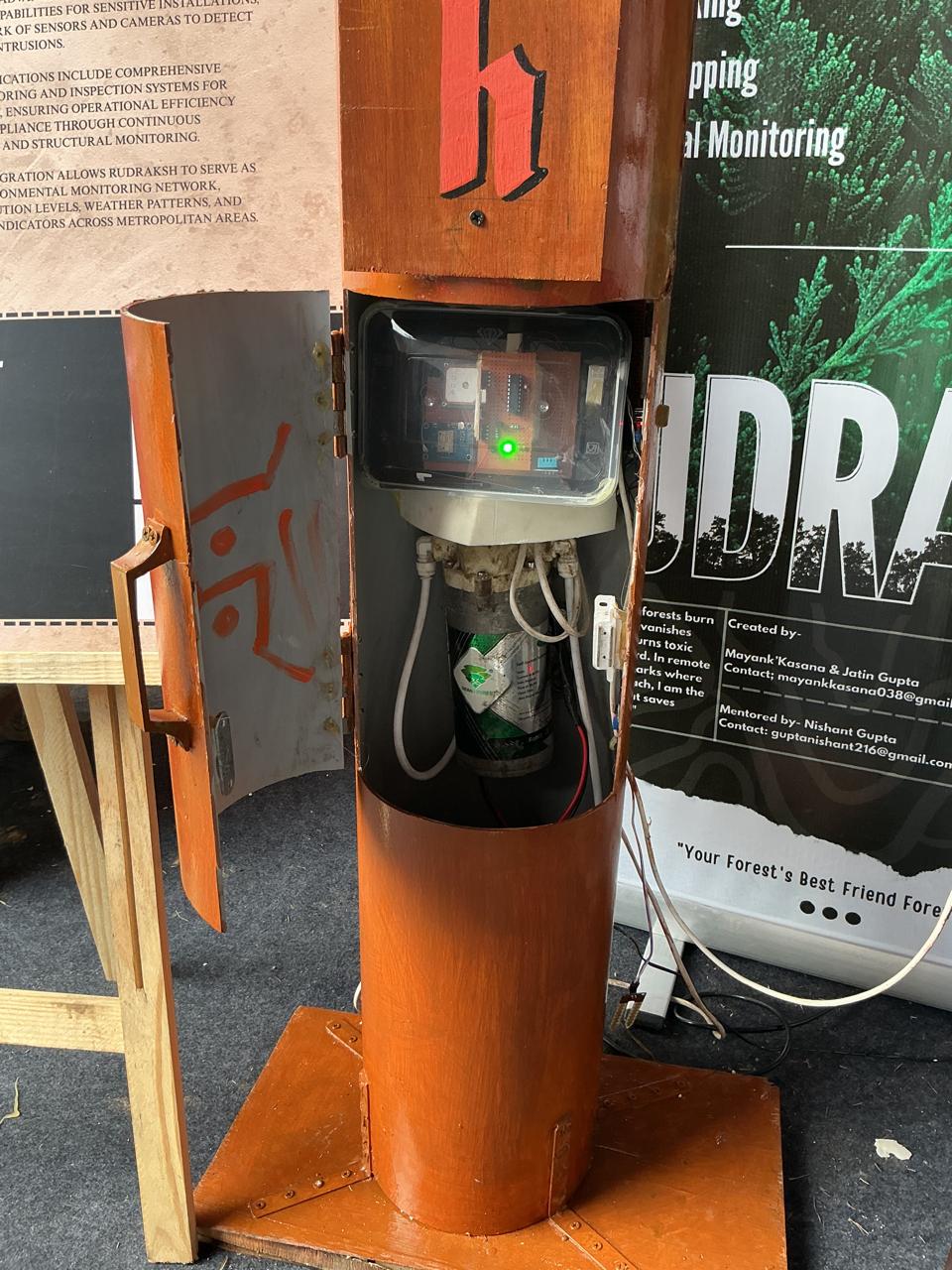
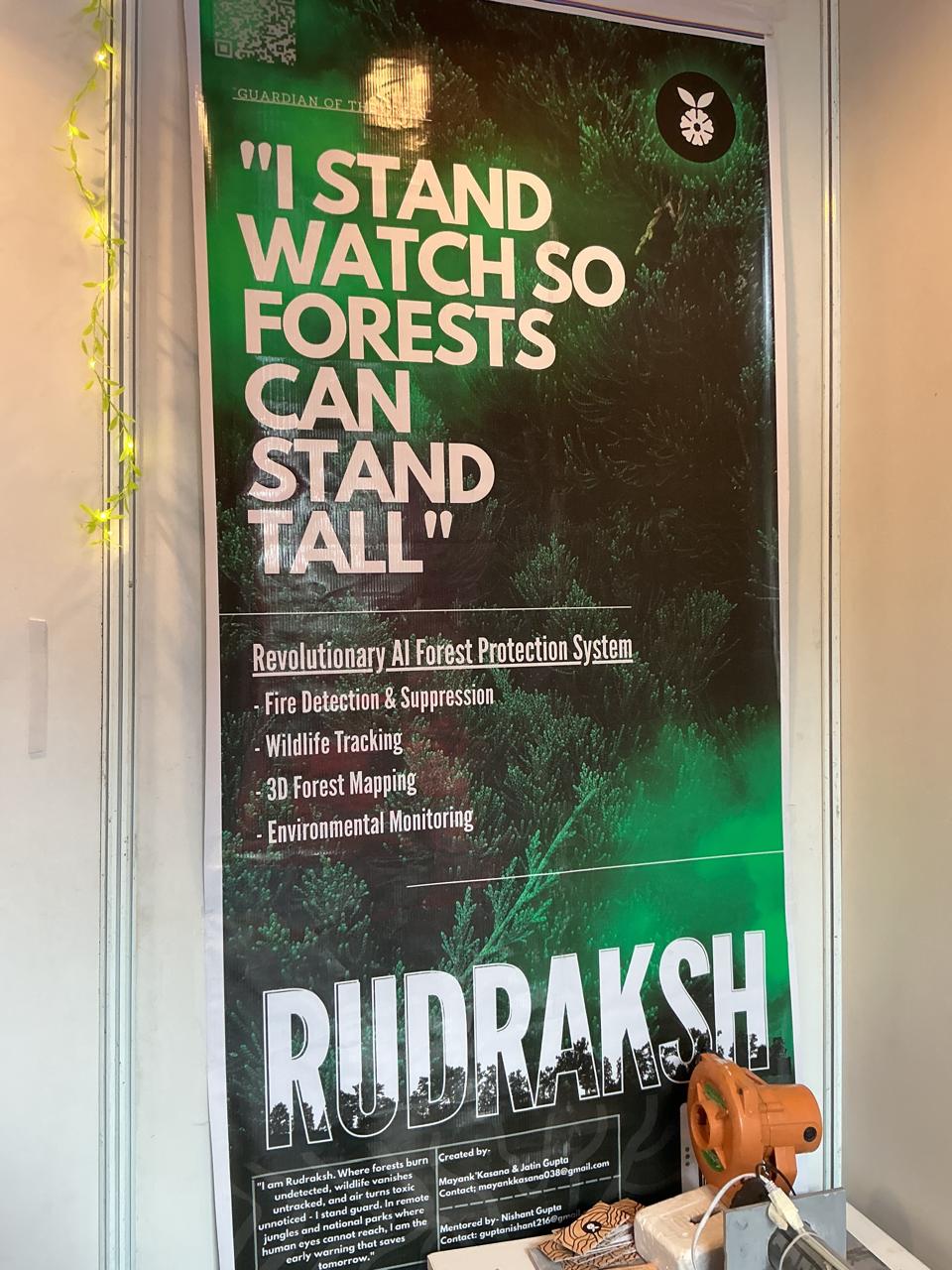
The finished tree went to the CBSE science exhibition with a full stall, banners and the story around it.
I also made a short story film of the tree: a scientist and a forest officer walk past it, tagged deer move through the grid, and the sprayers contain a fire across nine blocks. The film is an animation made with AI-assisted rendering and a synthetic voice.
Watch the film on YouTubeHoneycomb taught me the first lesson. A device hung on a living tree could look down, but it could not reach the ground: no water, no soil readings, and animals might damage it. I never built it, and moving past it is what gave me the artificial tree.
And I try to stay honest about what the tree proves. The exhibition tree shows the build. The wider grid of trees is a design concept; what exists today is one full-size tree, its film, and the record below.
One tree guards one spot. The real design is a grid: trees planted every 100 metres, about a hundred per square kilometre, all solar powered.
The grid is a design concept. The single exhibition tree is what exists today, and the network has not been tested in a forest.
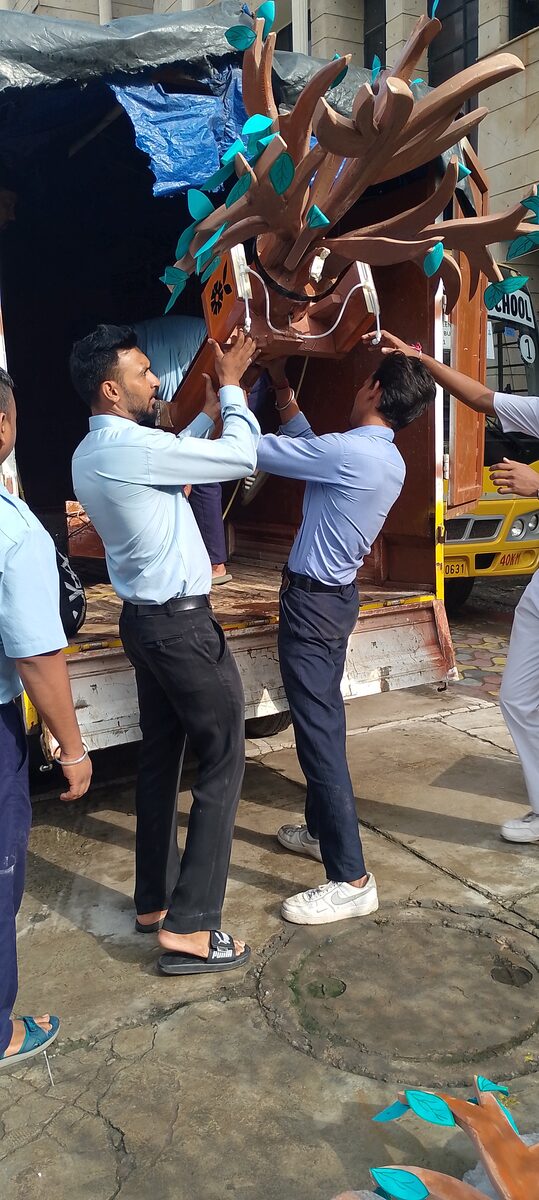
The making, the move and the show, from the project record.